

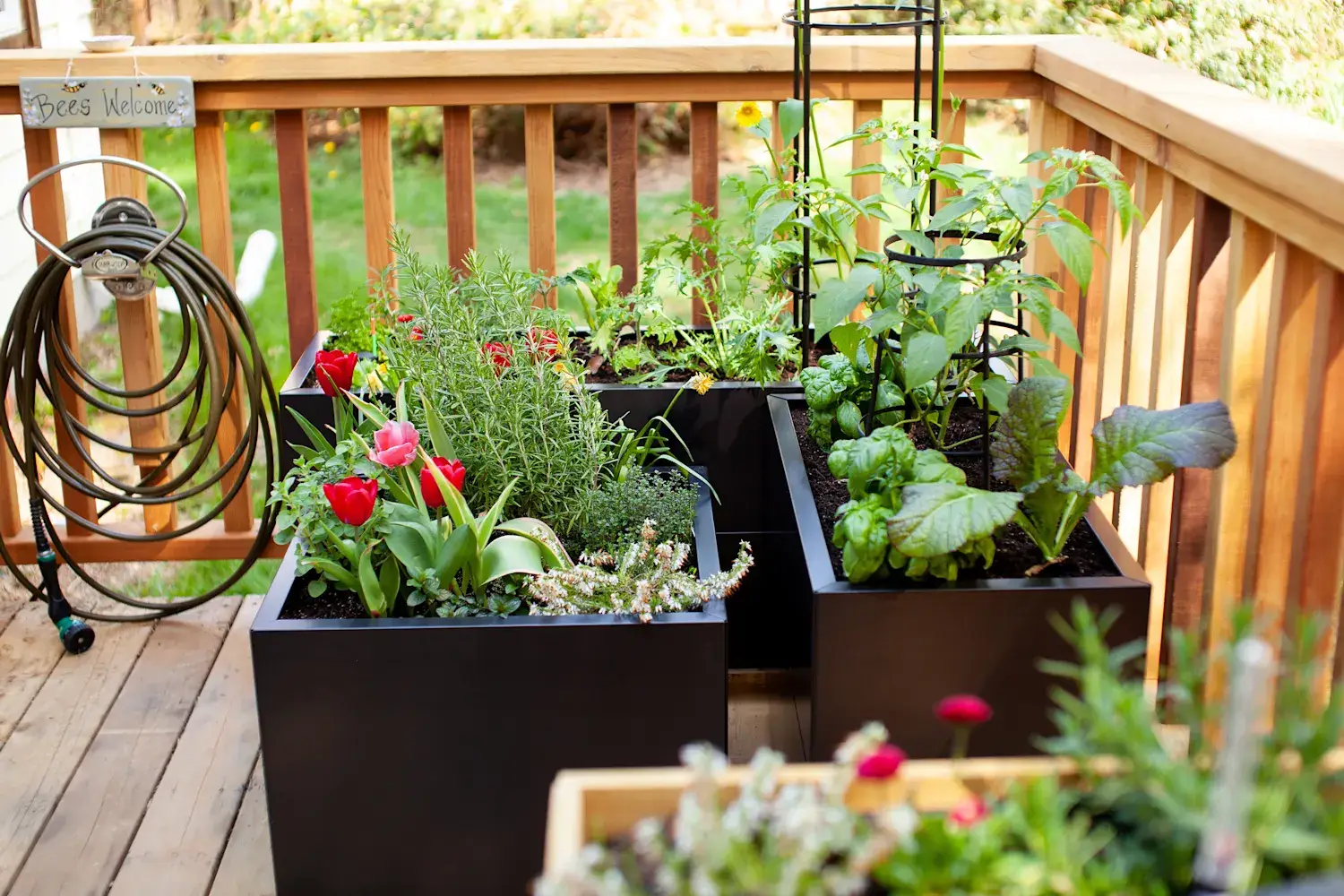
Vertical gardening is the small-space gardener’s most powerful technique. By exploiting walls, railings, and overhead structures, the growing area can be multiplied without expanding the footprint. Wall-mounted pocket planters, made from breathable fabric, can host a vertical herb garden or a cascade of trailing strawberries. Trellises and wire supports allow climbing plants such as runner beans, indeterminate tomatoes, and sweet peas to ascend, creating a green screen that provides privacy as well as produce. Hanging baskets, often used for ornamental bedding, can be repurposed for trailing cherry tomatoes, tumbling nasturtiums, or cascading rosemary. Stacking pots and tiered shelving systems, available from garden centres or improvised from reclaimed materials, create a stepped arrangement that ensures each plant receives adequate light. The visual effect of a planted vertical surface transforms a utilitarian space into an immersive green retreat.
Advertisement
Crop selection for small spaces should prioritise plants that offer a high ratio of harvest to time and space invested. Cut-and-come-again salad leaves, such as rocket, mizuna, and loose-leaf lettuces, provide multiple harvests from a single sowing and can be grown in a shallow tray. Herbs are perhaps the most satisfying small-space crop: a pot of chives, a bush of thyme, a column of rosemary, and a generous container of basil and parsley supply a kitchen with fresh flavour for months. Dwarf vegetable varieties, bred specifically for container culture, include patio aubergines, bush courgettes, and compact cucumbers. Strawberries and alpine strawberries thrive in pots and hanging baskets, delighting children and adults alike. Edible flowers such as calendula, viola, and borage add colour to salads and attract pollinators, which are essential even at height for fruiting crops, and can be encouraged by planting a few pollinator-friendly flowers nearby.
Maintenance of a small urban garden requires regular but simple routines. Watering is the most critical task, as containers dry out much faster than ground soil, especially in windy or sunny locations. A daily check, dipping a finger into the soil to test moisture, is advisable in summer. Liquid feeding with a balanced organic fertiliser every week or two during the growing season replenishes nutrients that are quickly leached from containers. Deadheading spent flowers encourages further blooming, and harvesting vegetables promptly signals the plant to keep producing. Pest problems, such as aphids, can often be managed by physical removal with a strong jet of water or by encouraging natural predators like ladybirds. The small scale of the garden makes close observation possible, and many urban gardeners find that this daily attentiveness becomes not a chore but a calming ritual that bookmarks the day, a few minutes of quiet stewardship that yields disproportionate psychological as well as botanical rewards.